
Thrombocytopenia means a low platelet count, usually below 1.5 lakh (150,000) per microlitre of blood. Platelets help the blood clot, so a very low count can cause easy bruising, red spots on the skin, or bleeding from the gums or nose. Common causes include viral infections such as dengue, immune thrombocytopenia (ITP), medicines and bone marrow disorders. Treatment depends on the cause and the platelet level.

Understanding thrombocytopenia
Thrombocytopenia refers to a condition in which the blood has fewer platelets than needed for normal clotting. When platelet levels drop, even minor injuries can lead to prolonged bleeding, bruising or internal complications. It may be temporary or chronic and can range from mild to life-threatening depending on the cause and platelet count.
Why early detection matters
Low platelets may indicate an underlying issue such as an immune disorder, infection, bone marrow disease or the effect of certain medicines. Patients often ignore early signs like easy bruising or gum bleeding. Untreated severe thrombocytopenia can lead to serious bleeding. Timely diagnosis prevents complications and guides the right management.
Advances in treatment
Modern management focuses on treating the underlying cause, restoring platelet counts and preventing bleeding. Treatment ranges from stopping an offending medicine and immune therapy to platelet transfusion or bone marrow evaluation. Specialised care is essential for ITP, bone marrow failure and cancer-related causes. Newer, better treatment options are now available for ITP.
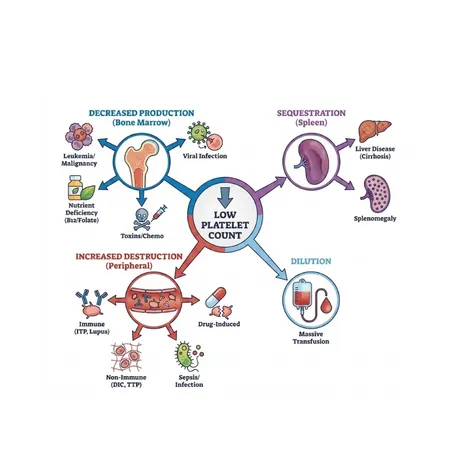
Causes of low platelets
Why platelet levels fall
- Immune thrombocytopenia (ITP)
- Viral infections such as dengue, hepatitis and HIV
- Bone marrow disorders: leukemia, aplastic anemia, myeloma
- Medication-induced platelet suppression
- Autoimmune diseases (lupus, rheumatoid arthritis)
- Vitamin B12 or folate deficiency
- Enlarged spleen trapping platelets
Symptoms
Signs that need medical review
- Easy bruising or purple/red skin spots (petechiae, purpura)
- Bleeding from gums or nose
- Heavy menstrual bleeding
- Prolonged bleeding from minor cuts
- Blood in urine or stool
- Severe cases: internal bleeding or neurological symptoms
Treatment
Targeted therapies to restore safe platelet levels
- Treating the underlying infection or disease
- Stopping offending medicines
- Steroids or other immune therapies for ITP
- IVIG in immune-related cases
- Platelet transfusion for severe bleeding
- Bone marrow evaluation when a marrow disorder is suspected
- Precautions to reduce bleeding risk
Low Platelets & ITP care with Dr Prakash Singh Shekhawat in Jaipur
At Jaipur Hematology Centre, Dr Prakash Singh Shekhawat (DM Clinical Haematology) evaluates each patient, explains the diagnosis and options clearly, and builds a treatment plan with the family. For complex cases he works with a multidisciplinary hospital team. Bone marrow transplant and CAR-T, when they are appropriate, are provided under his care as Head of the BMT & CAR-T Program at BMCHRC, Jaipur.
Frequently asked questions
What platelet count is dangerous?
Serious spontaneous bleeding is uncommon above 20,000–30,000 per microlitre, but risk depends on the cause and other factors. Any platelet count below normal with bleeding, or a very low count, needs prompt medical advice.
What is ITP?
Immune thrombocytopenia (ITP) is a condition in which the immune system destroys platelets. Many children recover on their own; adults more often need treatment such as steroids or newer medicines. A hematologist confirms the diagnosis by ruling out other causes.
This page is for general information and does not replace a medical consultation. Treatment decisions depend on each patient's diagnosis and condition.